← Selected workA robot built around
a measurement problem.
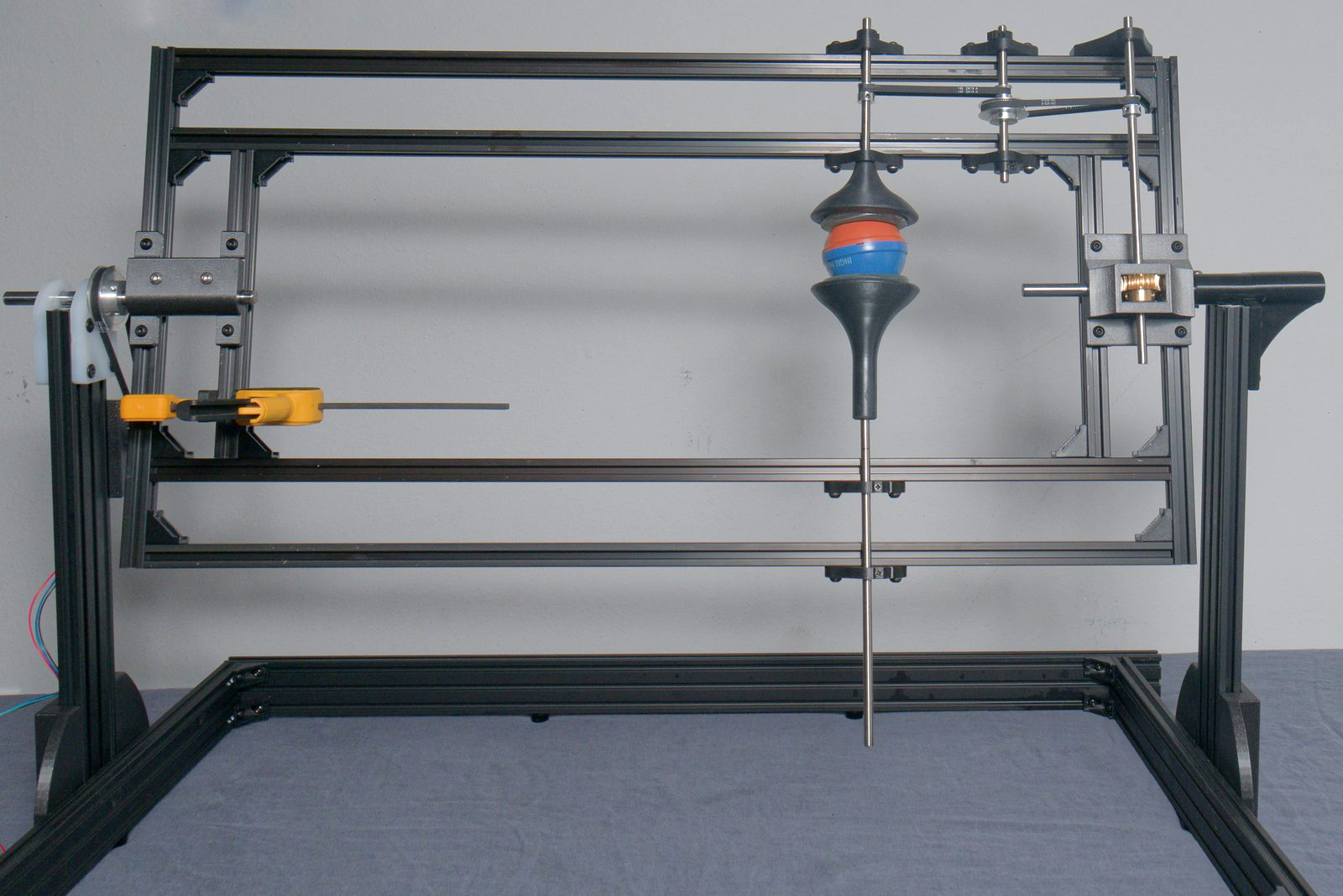
Mike Byington’s magnetometer calibration prototype moved the sensor while keeping the motor at a distance.
- Context
- Earlier professional work
Pipeline inspection R&D - Mike’s role
- Sole designer and builder
Concept through prototype - Disciplines
- Mechanical design, fabrication,
3D printing and Arduino control
The measurement challenge.
To calibrate a magnetic sensor, you expose it to a magnetic field in many different orientations. One way to do that is to rotate the device using a robot arm. But the motors close to the sensor can introduce their own magnetic fields.
Mike explored a purpose-specific alternative: keep the motor several feet from the device and transmit its motion mechanically. The challenge brought together sensor behavior, mechanical design, fabrication and control.
Building the prototype.
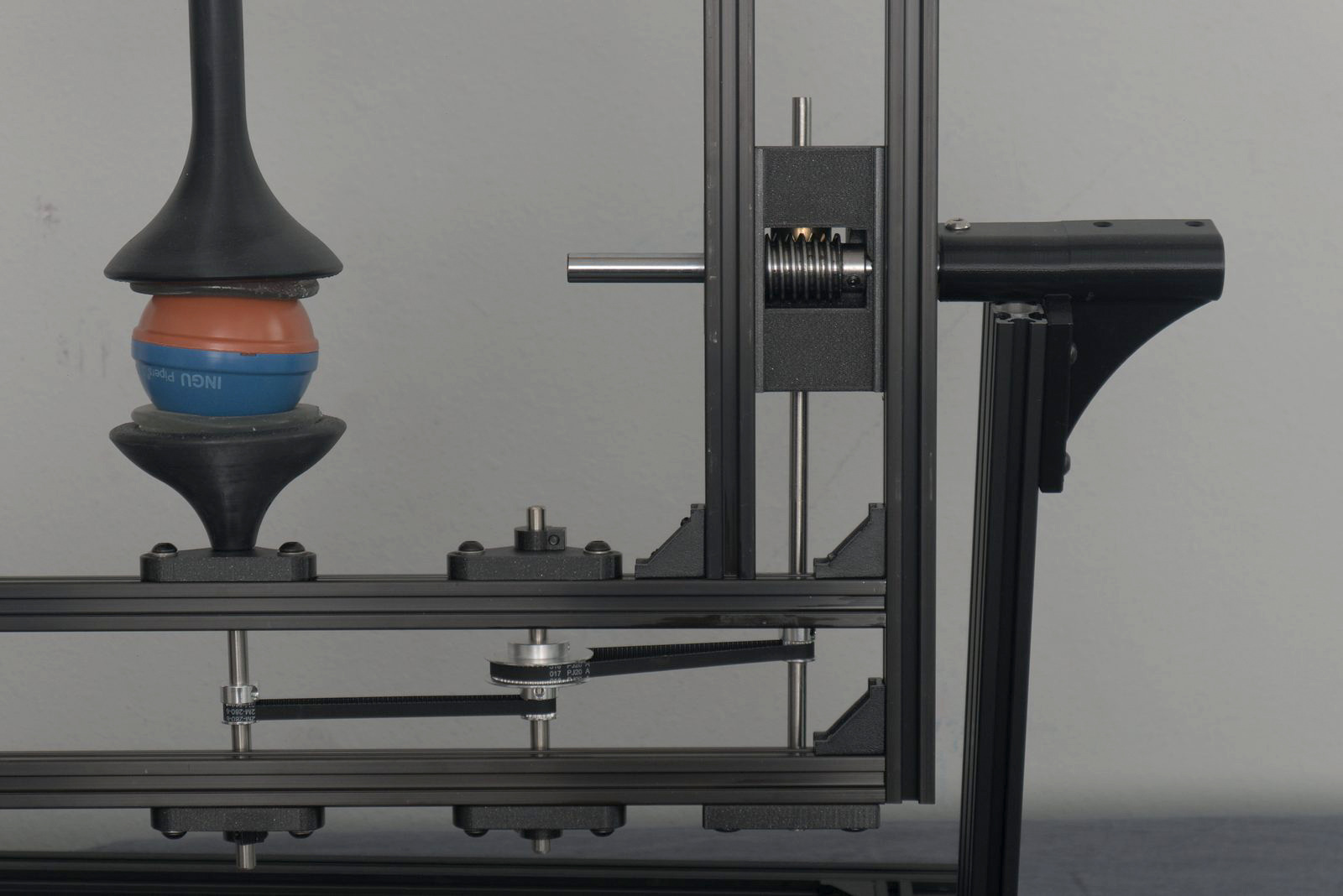
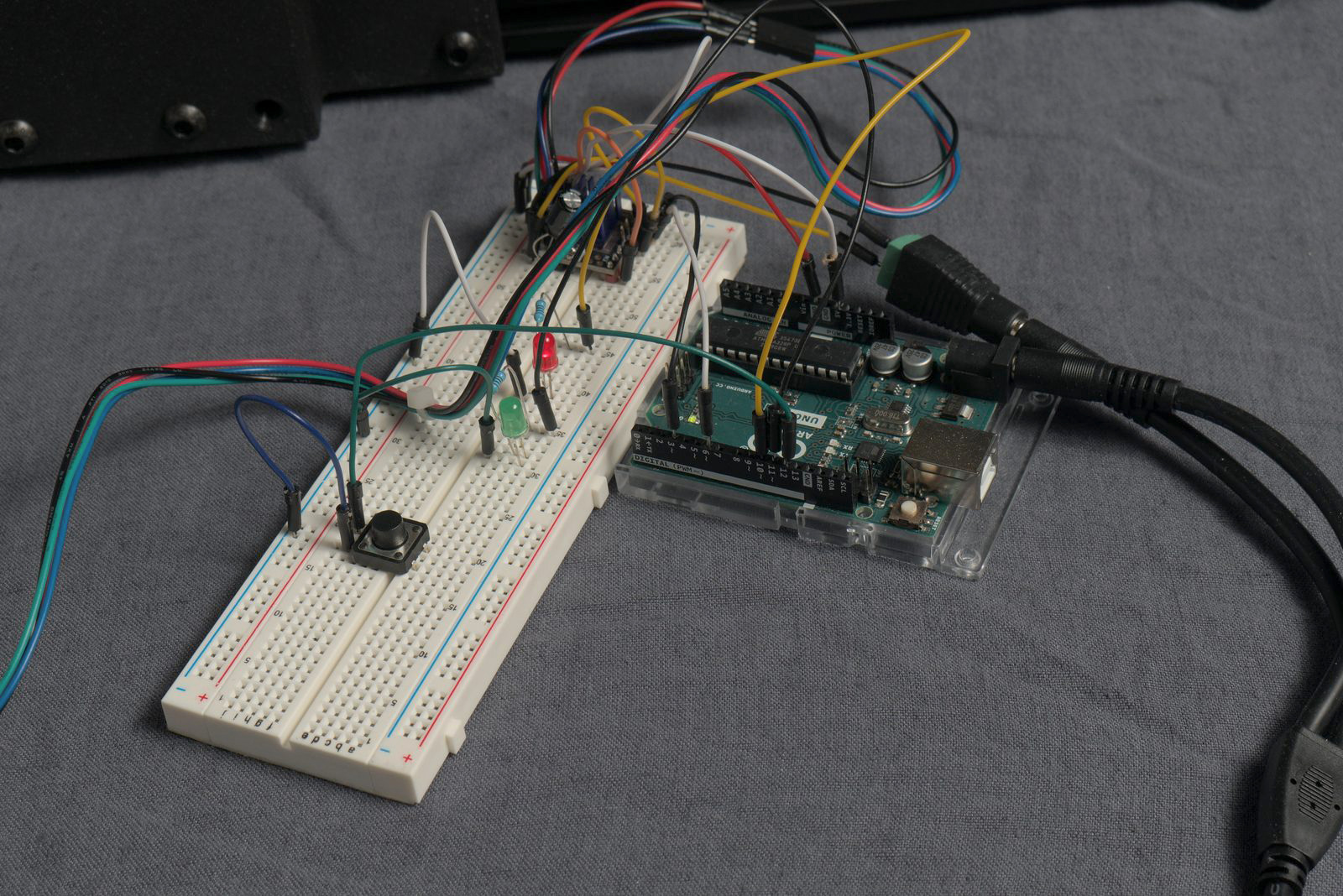
The frame used aluminum extrusion, printed brackets and supplier-made components. Belts, pulleys and a worm gear transmitted motion to the device holders. An Arduino controlled movements and pauses, allowing the device to rotate about two axes at different rates.
The prototype combined off-the-shelf parts with components designed for this particular job. It was a way to test an idea with real hardware before committing to a finished product.
Choosing the next step.
The robot demonstrated the approach, but it was not a production-ready system. Mike identified improvements to the motor, bearings, electronics and device holders that would be needed for further development.
The employer ultimately chose a commercial calibration system that changed the magnetic field electronically instead of moving the sensor. Mike’s account explains why that was the right decision once it was affordable: no mechanical wear parts, and control over field strength as well as direction.
The value of prototyping includes learning when another solution is the better choice.
Adapted from Mike’s project account. Read the full story and watch the prototype on his portfolio ↗